Report: AI and Geospatial Intelligence are Transforming Utilities
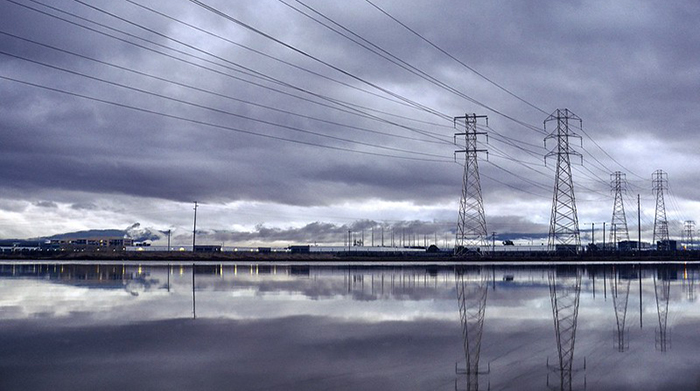
Image courtesy of Peter Thoeny under Attribution-NonCommercial-ShareAlike 2.0 Generic Deed, resized to 700 x 391 pixels.
I just stumbled onto a fascinating new report from Deloitte, published in July 2026, that I wanted to share with you today. What follows is a summary of Deloitte’s insights, but if you prefer the comprehensive details you can click on the link to the report below.
The report, entitled “From Silos to Synergy,” highlights a pivotal transition: Utilities are moving beyond small-scale pilot projects and toward full-scale deployment of Artificial Intelligence (AI) and geospatial intelligence, driven by an urgent need to strengthen grid resilience and optimize infrastructure maintenance in an increasingly volatile environment. Sounds good, right? Let’s explore.
Benefits and Hurdles for AI and Geospatial Intelligence
The core value of combining AI with geospatial intelligence lies in visibility.
Traditionally, utilities have been forced to manage assets using fragmented data sets. By integrating AI-driven analytics with location-based geospatial tools, companies can now gain a real-time, comprehensive view of operations. This allows for more precise outage management and predictive maintenance, enabling crews to address potential failures before they result in widespread blackouts. I love that!
That said, the Deloitte report notes that enterprise-wide adoption isn’t without hurdles. The primary obstacle is the prevalence of “data silos” or legacy systems where information is trapped within specific departments.
To truly harness the power of AI, organizations must break down these barriers and create a unified data architecture. The report suggests that while investments are high, the transition from “siloed” experiments to “synergistic” operations is the next great frontier for the industry, not to mention emergency preparedness.
The bottom line is that utilities need to invest in these technologies for operational efficiency, public safety, and economic stability. Start small, then focus on scaling up to cover entire service territories. There is little doubt, deployment and eventual scaling of AI and geospatial intelligence is necessary to ensure a more reliable and resilient energy future for everyone.