The Hidden Reliability Risk on High-Voltage Insulators
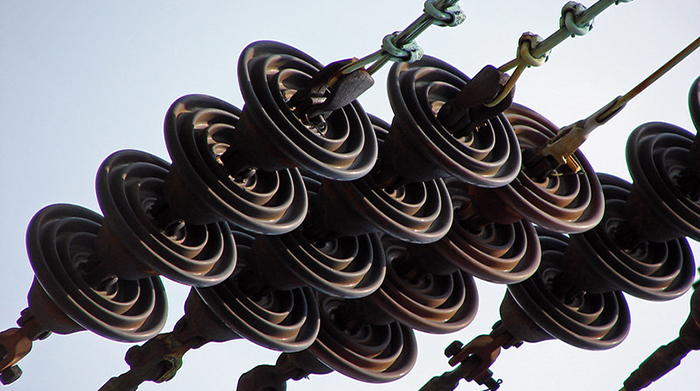
Image courtesy of Steve Fernie under Attribution-NonCommercial 2.0 Generic Deed, resized to 700 x 391 pixels.
I read an interesting (albeit relatively technical) article today from Powermag.com that discusses the hidden reliability risk associated with high-voltage insulators. Specifically, how the environment can negatively impact these assets. What follows is a summary of the article (for the full & original version, click here).
How the Environment Affects High-Voltage Insulators
The article points out that high-voltage insulators may look unchanged for years, but salt, industrial pollution, dust, moisture, ultraviolet exposure, and repeated weather cycles can gradually alter their performance and maintenance needs.
Contamination becomes an electrical concern when moisture combines with conductive deposits on an insulator’s surface, which is why the material’s ability to repel water matters. For example, hydrophobic surfaces encourage droplets rather than a continuous water film, and silicone materials are used in outdoor high-voltage applications partly because they can provide this behavior, alongside resistance to weathering and UV exposure.
The article argues that utilities should look beyond equipment age when evaluating risk. Similar insulators can face very different conditions depending on location, elevation, winds, pollution, and wetting frequency. Maintenance records can help reveal those differences. Repeated washing, recurring buildup, flashovers, and unusually short service intervals may point to persistent environmental stress. Reviewing this history can help distinguish a manageable surface problem from deeper equipment deterioration.
Cleaning and inspection remain appropriate when contamination is predictable and the equipment continues to perform reliably. But where repeated maintenance strains crews, access, or outage schedules, utilities might consider room-temperature-vulcanizing (RTV) silicone coatings for otherwise serviceable porcelain or glass insulators. By adding a hydrophobic surface, a coating may help address wet-contamination concerns without replacing the entire component.
That option has limits. Coatings cannot repair mechanical damage, deficient design, compromised hardware, or insulation that no longer meets system needs. Application quality, preparation, and operating conditions also matter. When deterioration goes deeper, replacement may be the sounder choice.
The broader lesson is to treat environmental exposure as asset information. By matching the response to the actual failure mechanism and service conditions, utilities can make more targeted maintenance choices for their high-voltage insulators, improving reliability and emergency preparedness, and reducing outages.