Why Succession Planning is Critical for Emergency Preparedness
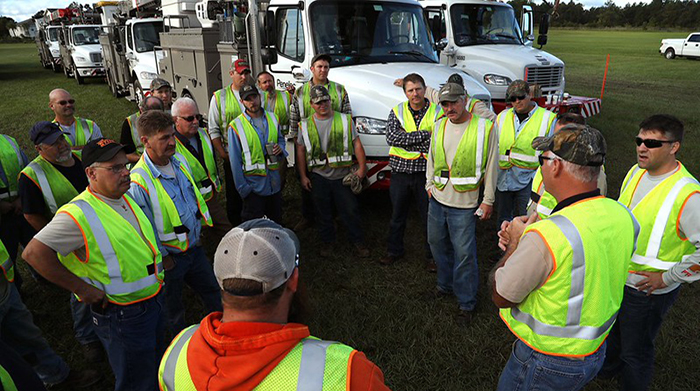
Image courtesy of FirstEnergy under Attribution-NoDerivs 2.0 Generic Deed, resized to 700 x 391 pixels.
For utilities, sustainable emergency preparedness relies on effective succession planning, something that not all utilities get right. Simply put, the industry is on the verge of a retirement boom, and without good succession planning, there is a lot of institutional knowledge that could walk right out the door and be lost forever.
Quantifying the Importance of Succession Planning
A quick look at the projections underscores the criticality here. About 25% of the U.S. utility workforce is expected to retire in the next 5 years, and this is expected to increase to a whopping 50% in 10 years. If these roles are not targeted for replacement years in advance, a company could face a knowledge drain.
A quick AI search reveals that “succession planning is the deliberate process of identifying critical roles, preparing people to step into them, and ensuring essential knowledge can be transferred before it is needed.” Couldn’t have said it better myself!
This cycle of sharing and retaining knowledge matters during blue-sky days, but it becomes especially clear during emergencies. For example, if only one person knows how to make a critical decision, access a system, or contact a partner, the response can slow at precisely the wrong moment.
A strong succession plan reduces that risk. It identifies essential positions across operations, engineering, communications, customer service, and incident command; names qualified backups; and clarifies who has authority to act. Continuity in leadership and institutional knowledge helps keep those efforts coordinated as teams rotate and conditions evolve. Cross training, mentoring, exercises and drills, and documented procedures help backups build practical readiness.
Succession planning is not simply a retirement checklist, nor does it mean assuming a crisis will happen tomorrow. It is an ongoing investment in operational resilience. Utilities can begin by asking: Which roles would create the greatest risk if suddenly vacant? Who can cover them today? What training, authority, or information would that person need? The answers will form the basis of a solid succession plan.