How Stormwater Sponges are Reducing Flooding in NYC
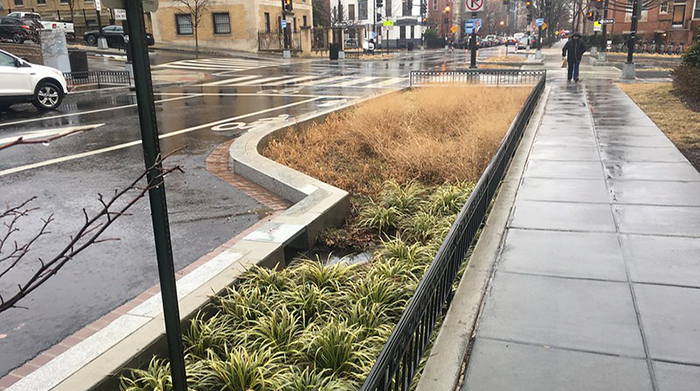
Image courtesy of Erica Fischer under Attribution 2.0 Generic Deed, resized to 700 x 391 pixels.
The DEP recently announced that it would be spending $8.4 million on the deployment of so-called “stormwater sponges” (AKA rain gardens or bioswales) in Queens, NYC, to combat the chronic flooding that has plagued the borough for decades. This is part of NYC’s overall effort to reduce overflows in combined sewer areas by 1.67 billion gallons per year by December 2040.
Could this sponge technology actually reduce flooding, and by extension reduce power outages and service interruptions? Let’s take a deeper dive…
The Squishy Truth About Stormwater Sponges
During heavy downpours, the concrete, asphalt, and pipes that comprise traditional city “gray” infrastructure can quickly become overwhelmed, leading to street flooding and sewer backups.
Conversely, stormwater sponges represent “green” infrastructure because they are designed to mimic the natural environment. They consist of a layer of porous soil, a bed of stone, and hardy native plants. When it rains, these gardens act like sponges, soaking up thousands of gallons of water that would otherwise rush into the sewer system.
In the U.S., there aren’t many areas that are more prone to street and basement flooding than Queens, which makes it the perfect location to try innovative approaches. Because many neighborhoods in the borough were built on former wetlands or have low-lying topography, they are particularly vulnerable to flash flooding.
In areas like Sunnyside, Maspeth, and Ridgewood, the city has installed thousands of these sponge gardens, each of which can handle 2,500 gallons of water during a single storm event. By strategically placing them along residential streets, a distributed network of absorption points has been created that significantly reduces the pressure on the underground pipes.
For one, love this idea! As climate change makes “100-year storms” a regular occurrence, the shift toward green infrastructure like stormwater sponges is a necessity, not only for residents, but also for the emergency preparedness efforts of the utility companies that serve them.