Root Cause of the 2025 Eaton Fire Determined
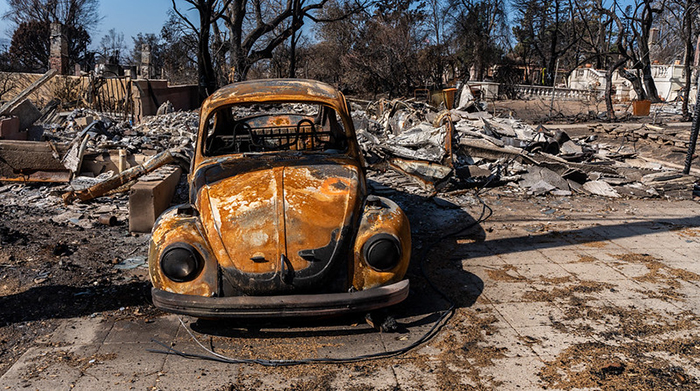
Image courtesy of Jim Farruggia under Attribution-NonCommercial 2.0 Generic Deed, resized to 700 x 391 pixels.
The Jan. 2025 Eaton Fire, which struck near Altadena and the San Gabriel Mountains, stands as a stark reminder of California’s evolving fire season. While historically January is considered part of the “wet season,” a combination of specific environmental factors and a distinct human-related ignition source converged to create one of the most destructive early-year blazes in Los Angeles County history.
The Immediate Cause of the Eaton Fire
Investigations by CAL FIRE and the Los Angeles County Fire Department concluded that the fire was caused by a utility equipment failure. During a period of intense Santa Ana winds, a damaged Southern California Edison (SCE) power line came into contact with dry vegetation near the Eaton Canyon area. The resulting electrical arc provided the initial spark necessary to ignite the surrounding brush, which was dried out from months of below-average rainfall.
While the downed power line was the spark, the environment acted as the fuel. Several critical factors accelerated the fire’s growth:
- Delayed Precipitation: The autumn and early winter of 2024 were unusually dry. The “atmospheric rivers” that typically soak the San Gabriel foothills in December just did not materialize.
- Santa Ana Winds: At the time of ignition, a high-pressure system over the Great Basin sent powerful, dry gusts through the mountain passes. These winds, reaching speeds of over 60 mph, not only pushed the flames rapidly toward residential areas but also made aerial firefighting efforts significantly more difficult.
- Topography: The steep, rugged terrain of Eaton Canyon created a “chimney effect,” drawing heat and flames upward and making ground access for hand crews nearly impossible in the early hours.
The Eaton Fire highlights that California wildfires are no longer just a seasonal threat – rather, it’s become a year-round risk. The bottom line is that for SCE and the other electric utilities in the region, the Eaton Fire serves as a definitive case study in how aging infrastructure and increasing extreme weather mandates that emergency preparedness efforts continuously evolve and improve.