Study: AI Could Slash Disaster Infrastructure Losses Drastically
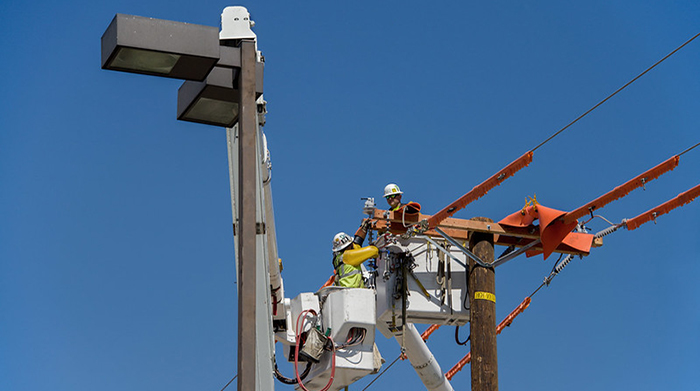
Image courtesy of Russ Allison Loar under Attribution-NonCommercial-NoDerivs 2.0 Generic Deed, resized to 700 x 391 pixels.
According to the 42-page AI for Infrastructure Resilience report published by Deloitte in June 2025, artificial intelligence (AI) tools could be used to reduce natural-disaster-caused infrastructure losses by 15%, inclusive of power grids, water infrastructure, and transportation networks.
The report notes that natural disasters have caused about $200 billion worth of damage in the last 15 years, and this number is projected to more than double, up to $460 billion, by 2050. Based on these findings, a 15% reduction would amount to a whopping $70 billion in cost avoidance globally over the next 25 years. Yes, sign me up for that, please!
How AI Can Reduce Infrastructure Losses
The report focuses on AI’s ability to lower infrastructure loses by engaging in activities that are “preventative, detective and responsive.” Examples include, but are not limited to, AI-powered digital twins, predictive maintenance tools, and scenario-planning analytical software and models.
The researchers go as far as to say that investing in AI is the single most important thing utilities can do to mitigate the impact of natural disasters. The reason is that the risk is growing every year, but luckily, so is the ability of AI to help.
That said, the report notes that the road to AI glory is filled with potholes. Utilities, governments, and community stakeholders face technical challenges, budgetary constraints, regulatory uncertainty, data limitations, and cybersecurity concerns, all of which represent barriers to effective implementation.
To help overcome these challenges, the report recommends starting small. Specifically, a pilot should be executed, likely with the help of a private company or expert consultant, that focuses on only one type of hazard. A successful pilot would ideally demonstrate enough value to encourage leadership to take a deeper dive into the AI pool.
To sum it up, it seems like AI is taking over the world, but that’s not necessarily a bad thing. If it can be leveraged from an emergency preparedness perspective to cut infrastructure losses for utilities and communities, I’m all for it.