Could Impending Water Shortages be Solved with Rainwater?
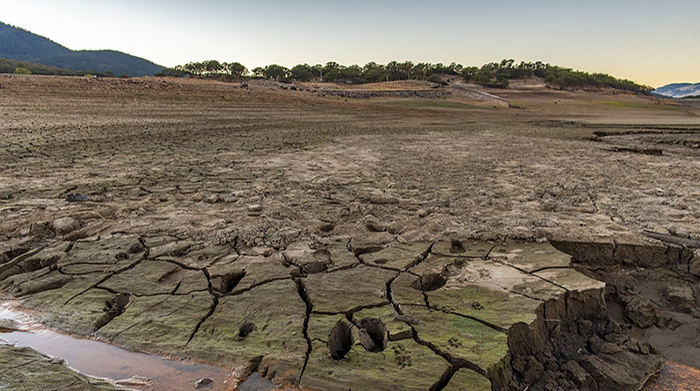
Image courtesy of Al Case under Attribution-NonCommercial-NoDerivs 2.0 Generic Deed, resized to 700 x 391 pixels.
The surge of data centers in Northern Virginia (the world’s largest hub for such infrastructure) is severely straining the local water supply, which could ultimately lead to water shortages. And this is not an issue that will go away anytime soon, as data center water consumption overall is projected to quadruple by 2035.
Reduced water resources would obviously impact Virginia’s residents in a multitude of ways, including reducing the effectiveness of recovery operations after certain emergency events.
For example, the ability to effectively control wildfire activity would become a lot more uncertain, potentially resulting in more damage to homes and infrastructure than what might be expected with fully stocked water resources to tap into.
The question is – could rainwater harvesting actually solve or at least alleviate the problem? Let’s review…
Can We Solve Data Center-Caused Water Shortages with Rainwater?
The cold, hard truth is that Virginia’s aquifers are being depleted faster than they can recharge. Because data centers typically draw from municipal utilities, their usage often remains “invisible” in public records.
To combat this, Senate Bill 521 was introduced. The proposed legislation would require new or expanded data centers to capture runoff from at least 30% of their roof surfaces for non-potable uses like cooling.
The debate over the bill highlights a complex intersection of environmental policy and industrial growth:
- The Case for Regulation: Advocates argue that because data centers consume millions of gallons daily, even small offsets through rainwater harvesting provide significant relief to the municipal grid.
- The Industry Pushback: Data center coalitions and companies like Google have expressed reservations, suggesting that mandatory harvesting might disrupt the natural hydrologic cycle or that current technological innovations – like reusing treated wastewater – are more effective.
- The Indirect Footprint: Some experts point out that most of a data center’s water “cost” is actually indirect, occurring at the power plants that generate their massive electricity needs.
While SB 521 has been pushed to the 2027 session pending further study, it’s an interesting concept. Honestly, I do not believe that rainwater is the solution, but perhaps it could reduce the propensity for water shortages by a couple percentage points. All I know is, water supplies seem to be dwindling in several parts of the U.S., so with or without data centers, something must be done.