How Advancement in AI Weather Forecasting Benefits Utilities
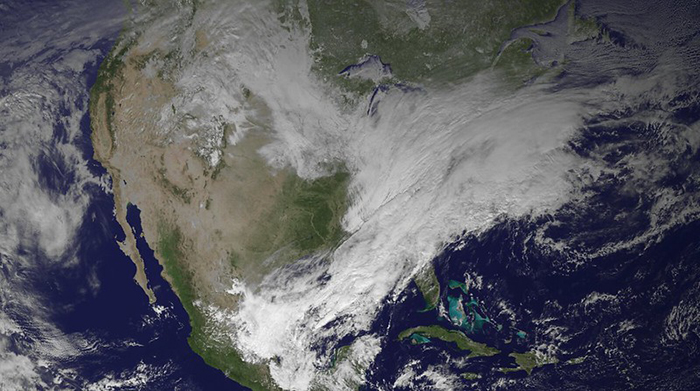
Image courtesy of NASA Goddard Space Flight Center under Attribution 2.0 Generic Deed, resized to 700 x 391 pixels.
AI weather forecasting is rapidly becoming a must-have tool, ushering in an era of unprecedented accuracy that holds significant implications for electric utilities. Traditional weather prediction models, while sophisticated, often struggle with the complex, chaotic nature of atmospheric science. AI, with its ability to process vast datasets and identify subtle patterns, is overcoming these limitations, leading to more reliable forecasts.
How AI Weather Forecasting Works and Why It’s Better
At the heart of AI’s impact is its capacity for enhanced data analysis. Machine learning algorithms can sift through terabytes of historical weather data, satellite imagery, sensor readings, and even social media sentiment to build highly nuanced predictive models. These models can detect correlations and precursors to severe weather events that human analysts or older algorithms might miss. This leads to earlier and more precise warnings for phenomena like hurricanes, heatwaves, or severe thunderstorms, allowing for better preparation.
For electric utilities, this improved forecasting translates directly into increased grid reliability. Accurate predictions of temperature are crucial for anticipating demand. Similarly, knowing the likely path and intensity of a snowstorm or hurricane allows utilities to pre-position repair crews and equipment, minimizing storm restoration times in the event of outages.
AI weather forecasting also aids in the integration of renewable energy sources. Solar and wind power are inherently variable, dependent on weather conditions. AI can provide more accurate forecasts for solar irradiation and wind speeds, allowing utilities to better predict the output of these renewable assets. This is vital for maintaining grid stability, as it enables grid operators to balance the intermittent supply from renewables with more dispatchable energy sources.
The bottom line is that better weather forecasts result in increased grid reliability. By providing more accurate and timely weather predictions, AI weather forecasting empowers electric utilities to minimize interruptions despite the changing climate and increased reliance on renewable energy.