How Floating Solar Can Help Electric Utilities Meet Demand
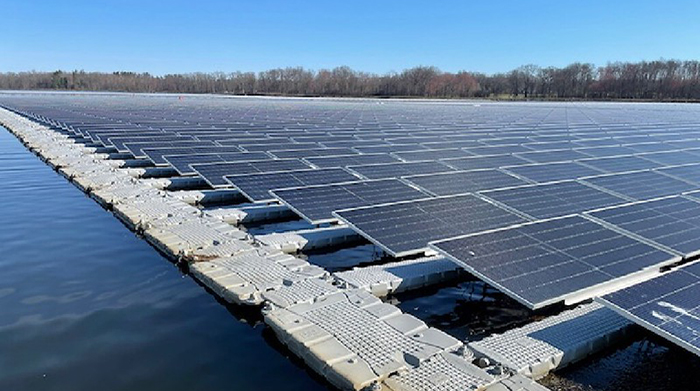
Image courtesy of Oregon State University under Attribution-ShareAlike 4.0 International Deed, resized to 700 x 391 pixels.
Floating solar (i.e., floating photovoltaic (FPV) system), involves mounting solar panels onto structures that float on bodies of water such as lakes, reservoirs, and ponds. OUC’s floating solar array is a good example.
This technology offers several advantages over traditional land-based solar installations, and is something that electric utilities should be interested in as a way to help meet increasing demand.
Opportunities and Next Steps for Floating Solar
One key benefit is land conservation. By utilizing otherwise unused water surfaces, FPV systems avoid competing with agriculture, development, or natural habitats for land use. This is particularly valuable in densely populated areas where land is scarce and expensive.
Additionally, the water beneath the panels helps to keep them cool, which can improve their efficiency and energy production. Cooler panels operate more effectively, leading to higher electricity output compared to land-based systems in similar conditions.
For electric utilities, integrating floating solar presents significant opportunities to meet increasing energy demand and achieve renewable energy targets. FPV systems can be deployed on existing water bodies near substations or grid connections, reducing transmission costs and enhancing grid stability. These systems can also be co-located with hydroelectric power plants, creating hybrid energy systems that optimize energy production and grid management.
To leverage floating solar effectively, utilities should, first and foremost, conduct feasibility studies – which analyze factors such as water depth, water quality, and environmental impacts – to assess the suitability of water bodies for FPV deployment.
Also, utilities should try and collaborate or partner with research institutions, government agencies, and other stakeholders in an effort to help drive innovation, reduce costs, and establish clear regulatory frameworks and permitting processes.
Finally, implementing pilot projects and demonstration sites can help utilities gain practical experience, evaluate performance, and refine best practices for FPV system design, installation, and operation.
The bottom line is that floating solar, while not the ‘end all, be all,’ can serve as one more tool in the solar capacity toolbox.