Report: US Power Grid at a Turning Point
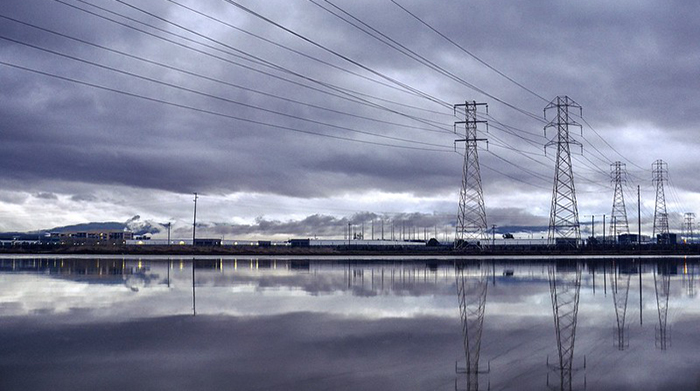
Image courtesy of Peter Thoeny under Attribution-NonCommercial-ShareAlike 2.0 Generic Deed, resized to 700 x 391 pixels.
A new report from Atlas Public Policy, supported by Environmental Defense Fund, examines what power grid operators are planning in the face of rapid industry change. Specifically, electricity demand is rising, with forecasts pointing to substantial growth through 2050, driven in part by data center demand and vehicle electrification.
The burning question is – what does it mean for the electric utilities operating the grid?
State of the Industry for Power Grid Operators
Clean energy and storage still make up the lion’s share of planned capacity, but momentum has cooled from its 2024 peak. At the same time, planned fossil-fuel capacity (mostly natural gas) has rebounded. Developers expect about 68 gigawatts of new fossil capacity to come online between 2026 and 2030, a 45% increase in plans over just six months. If built, fossil plants could account for roughly 70% of the new capacity pipeline by 2030.
However, that shift is not guaranteed. Gas turbine supply shortages, rising equipment costs, and uncertainty about how much electricity new data centers will actually need could delay or derail projects. Planned projects can also change: 75% of U.S. interconnection requests filed from 2000 to 2020 had been withdrawn by 2025. Meanwhile, clean-energy cancellations have risen since 2022, even as fossil project cancellations have remained low.
The geography of development is concentrated, too. Just 3 states – Texas, California, and Arizona – account for about 50% of planned clean power capacity, and another set of 3 states – Texas, Louisiana, and Pennsylvania – account for 50% of planned fossil capacity. Texas leads both categories, reflecting its projected demand growth, energy resources, and regulatory environment.
Coal is declining more slowly than expected. Less than one gigawatt retired in 2025 (the lowest annual total since 2009) and federal actions and reliability concerns could further delay retirements.
The bottom line is that rising demand does not dictate a single path. Decisions on generation, storage, transmission, and efficiency will shape the power grid for decades.