The Role of BESS in Grid Reliability
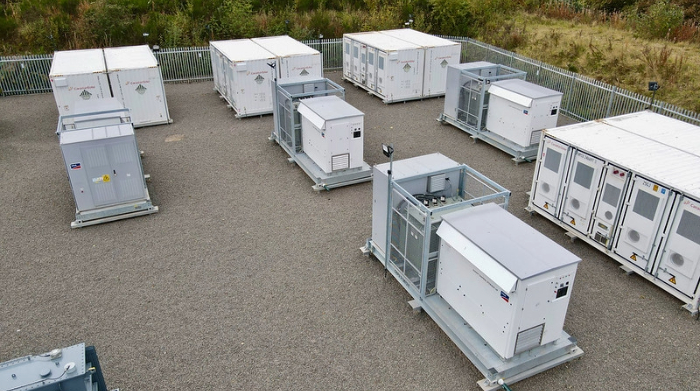
Image courtesy of Radix Ground Screws under Attribution 2.0 Generic Deed, resized to 700 x 391 pixels.
Battery energy storage systems (BESS) are emerging as a key technology for enhancing the reliability and resilience of the electric grid. By storing energy and releasing it when needed, BESS can address some of the most pressing challenges facing grid operators today.
The Many Benefits of BESS
One of the primary benefits of BESS is its ability to provide frequency regulation services. Frequency regulation is the ongoing balancing of electricity supply and demand that is required to maintain a stable and reliable grid. Because these systems can respond to signals in milliseconds, power can be quickly injected or absorbed to keep grid frequency within acceptable limits. This is especially valuable as the grid incorporates more variable renewable energy sources, such as solar and wind power.
Battery energy storage systems can also enhance grid reliability by providing voltage support, which is the ability to maintain voltage levels within a specified range. As demand for electricity increases, voltage levels tend to drop, which can lead to equipment malfunction and even blackouts. These systems can inject reactive power into the grid to boost voltage levels and prevent these problems.
Another benefit is the ability to provide backup power during outages. When a power plant or transmission line fails, BESS can quickly discharge stored energy to keep critical loads online. This can be particularly important for hospitals, data centers, and other essential facilities. In addition, BESS can be used to island a portion of the grid and keep it running independently of the main grid.
Finally, BESS can improve the overall efficiency of the grid. By storing energy during periods of low demand and releasing it during periods of high demand, BESS can reduce the need for peaker plants, which are typically expensive and dirty. BESS can also reduce transmission congestion by storing energy locally and reducing the amount of power that needs to be transmitted over long distances.
Overall, battery energy storage systems offer a wide range of benefits for improving the reliability and resilience of the electric grid. As the cost of BESS continues to decline, these systems are poised to play an increasingly important role in the future of electricity.