Leveraging Battery Energy Storage Systems to Improve Grid Stability
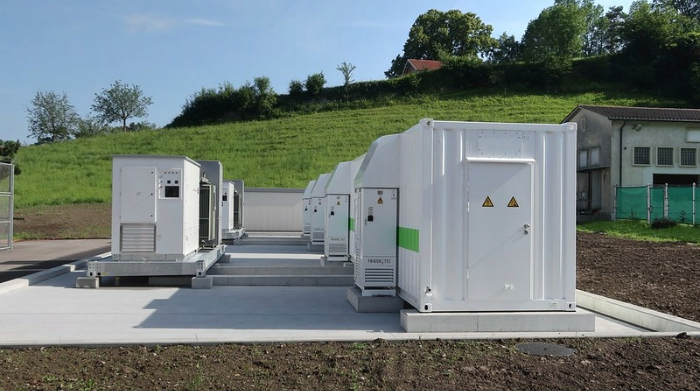
Image courtesy of Kecko under Attribution 2.0 Generic Deed, resized to 700 x 391 pixels.
Battery energy storage systems (BESS) are a rapidly growing, crucial part of the renewable energy mix that can help improve grid reliability because they can ease load for utilities during peak hours. Overall, U.S. utility-scale battery storage deployments increased 66% in 2024.
Although a whopping 82% of the new U.S. battery storage capacity in 2024 was built in California and Texas, the benefits that have been experienced are giving other states a solid reason to jump into the fray. Even now, states like New Jersey and New York are pursuing plans to deploy the technology.
Under the Hood of Battery Energy Storage Systems
A BESS is an electrochemical device that stores energy and discharges it when needed, primarily comprised of multiple battery modules, a power conversion system (PCS), and a control system. The battery modules store the energy, the PCS converts the energy from DC to AC or vice versa, and the control system manages the charging and discharging of the battery.
Battery energy storage systems provide a variety of benefits to utilities, including:
- Improved grid reliability: These systems can seamlessly provide backup power during an outage.
- Increased grid flexibility: They can help utilities manage and optimize the flow of electricity on the grid, reducing grid congestion and improving overall efficiency.
- Reduced reliance on fossil fuels: The ability to store energy from renewable sources helps utilities reduce their reliance on fossil fuels.
- Financial benefits: A BESS can store energy when it is cheap and discharge it when it is expensive.
In addition to the utility benefits, these systems are also beneficial for communities, and the planet as a whole. They are becoming increasingly cost-effective, and they are now being deployed by utilities around the world. And the cost of battery energy storage systems is expected to continue to decline, opening the door to play an even larger role for utilities in the future.