University of Michigan Explores Wave Energy Potential
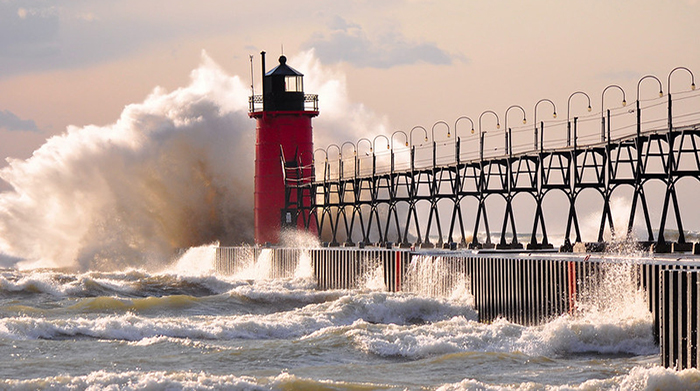
Image courtesy of Michael Stolz under Attribution-NonCommercial-ShareAlike 2.0 Generic Deed, resized to 700 x 391 pixels.
There have been some exciting developments recently when it comes to harnessing wave energy. Scientists at the University of Michigan are actively exploring the feasibility of generating electricity by harnessing hydrokinetic energy from the waves surrounding Beaver Island, a remote island nestled within Lake Michigan. This pioneering work could unlock a sustainable, renewable energy source for island communities and beyond.
The State of Wave Energy Technology
Wave energy relies on hydrokinetic energy, or the kinetic energy of moving water. Unlike traditional hydroelectric dams that rely on the force of falling water, this technology captures the energy of flowing water or, in this case, wave motion.
The University of Michigan’s research, primarily based at Beaver Island due to its geographical isolation and reliance on external energy sources, involves deploying and testing various wave energy converter (WEC) prototypes. These devices, ranging in design and mechanism, are engineered to capture the rise and fall of waves and convert that mechanical motion into electrical power.
Early-stage projects have focused on understanding the unique challenges and opportunities presented by the lake’s specific wave characteristics, including water depth, fetch (the distance over which wind blows across the water), and seasonal variations.
Key areas of investigation include the durability of WECs in freshwater environments, which differ from harsher marine conditions. Researchers are also assessing the efficiency of different designs under prevailing Great Lakes weather patterns and monitoring potential environmental impacts on aquatic life and sediment transport. The economic viability of such systems for remote locations like Beaver Island is also a crucial aspect of the study, aiming to provide a cost-effective and reliable alternative to current energy solutions.
The success of this research could have significant implications. For Beaver Island, it offers the potential for energy independence, reducing reliance on costly and carbon-intensive diesel generators. On a larger scale, it could pave the way for other coastal communities and even inland waterways to explore hydrokinetic energy as a viable component of a diversified renewable energy portfolio, demonstrating that wave energy can be harnessed in unexpected and innovative ways.