Utility Vegetation Management Practices to Minimize Outages
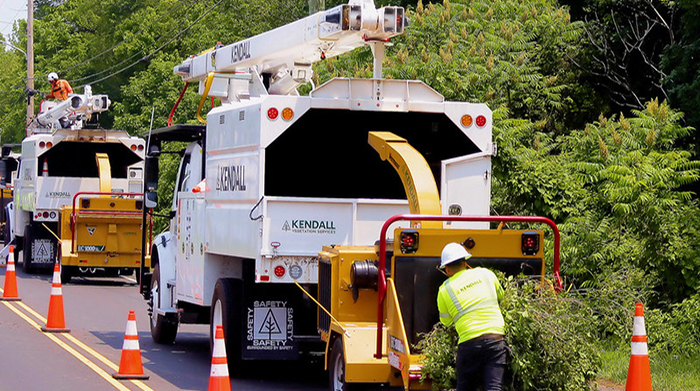
Image courtesy of raymondclarkeimages under Attribution-NonCommercial 4.0 International Deed, resized to 700 x 391 pixels.
For power grid operators, utility vegetation management is a critical yet often overlooked aspect of emergency preparedness. Simply put, trees and other plant life can pose a serious threat to grid reliability. This makes implementing robust vegetation management practices a critical component of proactive emergency planning.
Utility Vegetation Management Options
Generally, a prerequisite to identifying optimal utility vegetation management tactics is to work with arborists and certified tree risk assessors to identify the potential hazards and categorize trees based on their proximity to lines, species, health, and susceptibility to failure. This allows for prioritization of removal or trimming efforts, focusing on high-risk trees that could fall onto lines during severe weather.
Another prerequisite is public outreach and education. This can help prevent conflicts and facilitate access for necessary work. Educating the public on safe tree-trimming practices around power lines also contributes to overall grid safety.
In terms of specific tactics, one of the cornerstones of effective vegetation management is right-of-way (ROW) clearing, which involves systematically removing or controlling vegetation within a designated corridor around power lines. This isn’t a one-time task; it requires a cyclical approach, with regular inspections and trimming cycles tailored to the specific growth rates of local flora. Different types of vegetation, such as fast-growing invasive species, may necessitate more frequent attention.
Another approach, integrated vegetation management (IVM), is a bit more holistic and sustainable. Instead of solely relying on mechanical cutting, IVM incorporates a range of techniques that consider the long-term ecological impact. This can include targeted herbicide application (when appropriate and with strict adherence to regulations and public safety), biological controls, and even strategic planting of low-growing, non-invasive species within the ROW to deter undesirable growth.
Finally, advanced technology should be leveraged to the extent possible. For example, drones equipped with high-resolution cameras and LiDAR can provide detailed aerial surveys, identifying potential issues more efficiently and safely than traditional ground patrols. And data analytics can then be used to optimize trimming schedules, predict growth patterns, and track the effectiveness of all utility vegetation management strategies.
And as a backup, there’s always sheep grazing!