Boosting Resilience of Utility Scale Solar PV Systems
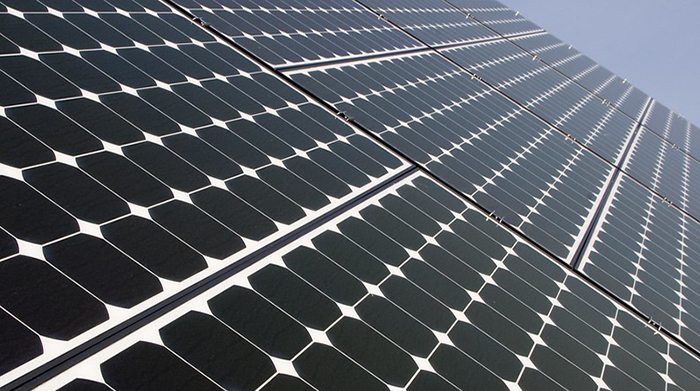
Image courtesy of pgegreenenergy under Attribution 2.0 Generic Deed, resized to 700 x 391 pixels.
The push for renewable energy has prompted more and more interest in utility scale solar PV systems. Although these systems are usually developed by independent contractors, the power they generate is typically sold to local utilities under long-term contracts and therefore they are an increasingly important component of the overall energy mix.
Unfortunately, these systems can be easily compromised if best practices are not followed during design & development. Here’s a quick primer on what you need to know.
Keys for Making Utility Scale Solar PV Systems More Resilient
A recent report from the Rocky Mountain Institute (RMI) sheds some light on how solar PV systems can be made to be more resilient in the face of heavy storm activity. Specifically, the report analyzed real-world deployments to determine the differences between systems that are prone to failure and those that are more resilient.
Much of this comes down to differences in engineering specifications, resilience standards, testing protocols, and materials. According to the RMI report, utility scale solar PV systems work best when dual post piers, lateral racking supports, and vibration-resistant connections are utilized; when extra bolting is used; and when structural calculations are on record.
On the flip side, PV systems that have failed generally utilize subpar materials (top-down or T-clamps instead of bolts, undersized rack and lack of rack support, undersized bolts, lack of vibration-resistant connectors, etc.), and/or have not been designed properly for the environment (pressure too low, low-cycle fatigue failure, etc.).
The protocols and attributes highlighted in the report that are most beneficial for resilience and reliability include avoiding self-tapping screws, applying quality-control protocols to bolts, specifying high-load PV modules based on structural calculations, and following ASCE 7 structural engineering requirements.
If this is your area of focus, I would strongly recommend reading the report. And if not, well, I still think it is important to share knowledge, which in this case relates to do’s and don’ts for the resilience of utility scale solar PV systems.