PG&E Launches Centralized Wildfire Monitoring Center
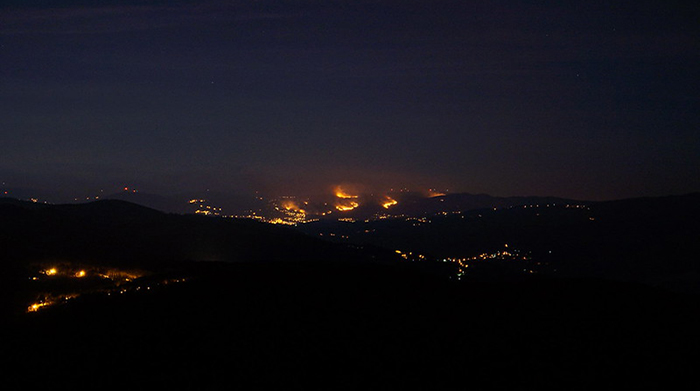
Image courtesy of Ricardo Faria under Attribution-ShareAlike 2.0 Generic Deed, resized to 700 x 391 pixels.
In a significant move to combat the escalating threat of wildfires, California’s Pacific Gas and Electric (PG&E) recently launched a revolutionary wildfire monitoring center, the first of its kind in the industry. This makes a ton of sense, especially for a utility like PG&E that operates in the heart of fire country, so let’s take a bit of a deeper dive.
Nuts and Bolts of the Wildfire Monitoring Technology
The system monitors environmental conditions and gathers real-time, high-resolution data and advanced analytics to proactively identify and mitigate wildfire risks, enhancing the safety and reliability of the power grid. Click here for a more detailed look at the numbers.
It integrates a suite of sophisticated technologies, including a network of weather stations, cameras, and sensors strategically deployed across PG&E’s service territory, which collect environmental data like temperature, humidity, wind speed, and vegetation dryness. This information is then fed into advanced modeling and artificial intelligence (AI) systems to predict the likelihood and potential spread of wildfires.
A key component of the center’s strategy is its ability to detect early signs of potential ignition sources. By analyzing the data streams, operators can identify conditions that might lead to electrical equipment igniting dry vegetation, such as high winds, equipment malfunctions, or faulty overhead lines. This early wildfire detection allows PG&E to take timely preventative actions, which may include de-energizing power lines in high-risk areas or dispatching crews for rapid inspection and repair.
The center also plays a crucial role in coordinating response efforts during wildfire events. It serves as a central command hub, integrating information from various sources, including fire agencies and public safety officials. This allows for a more coordinated and efficient response to active fires, minimizing their impact on communities and infrastructure.
Overall, this is a solid move by PG&E. And a necessary one, as the utility has had some bad experiences with wildfires (for example, it paid $55 million for the 2021 Dixie Fire, and pleaded guilty to 84 counts of manslaughter for the 2018 Camp Fire). Luckily, this new wildfire monitoring center should help reduce these types of risks going forward.