How to Make Your Grid Hardening Efforts Smarter
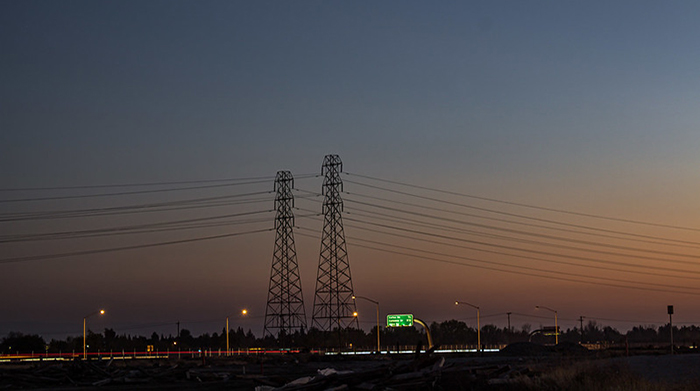
Image courtesy of David Seibold under Attribution-NonCommercial 2.0 Generic Deed, resized to 700 x 391 pixels.
If you think grid hardening is optional, you’re living in the past. Between rapidly increasing demand, extreme weather events, cybersecurity risks, and geopolitical instability, the challenge can only be expected to grow each and every year.
And the proof is in the proverbial pudding: The U.S. experienced 2x the number of weather-related blackouts in the last 10 years compared to the prior 10-year period, and in 2026 the demand for electricity is expected to reach an all-time high of over 4,200 billion kWh. For these and similar reasons, it’s time to make your grid hardening initiatives smarter and better.
How Electric Utilities Can Enhance Grid Hardening
Hardening efforts can take several forms, one of which is physical hardening. This includes installing fire-resistant poles, undergrounding power lines, raising substations, installing physical barriers, and similar tactics.
However, while upgrading or hardening physical poles, wires and substations is a great first step, the key to go-forward grid hardening is to make it more intelligent and automated. This means deploying technologies, devices and systems (ADMS, distributed energy resources or DERs, grid sensors, smart meters, drones, etc.) that can proactively monitor assets and analyze data in real time, while adapting and responding on the fly.
The challenge is that these activities require the identification of all system gaps, which means that the entire infrastructure must be evaluated, piece by painstaking piece. Otherwise, important vulnerabilities could be missed, which can’t happen because the chain is only as strong as its weakest link.
This holistic approach requires a long-run view, and a complete collaboration across all silos of the business. Making decisions in a vacuum will produce fragmented and incomplete results. Simply put, no stone should be left unturned.
There is no doubt about it, the environmental threats that utilities need to manage are increasing in scope, frequency and complexity. Therefore, for optimal emergency preparedness, best-in-class practices must be incorporated into any of your grid hardening efforts.